The Gumpii Apothecary
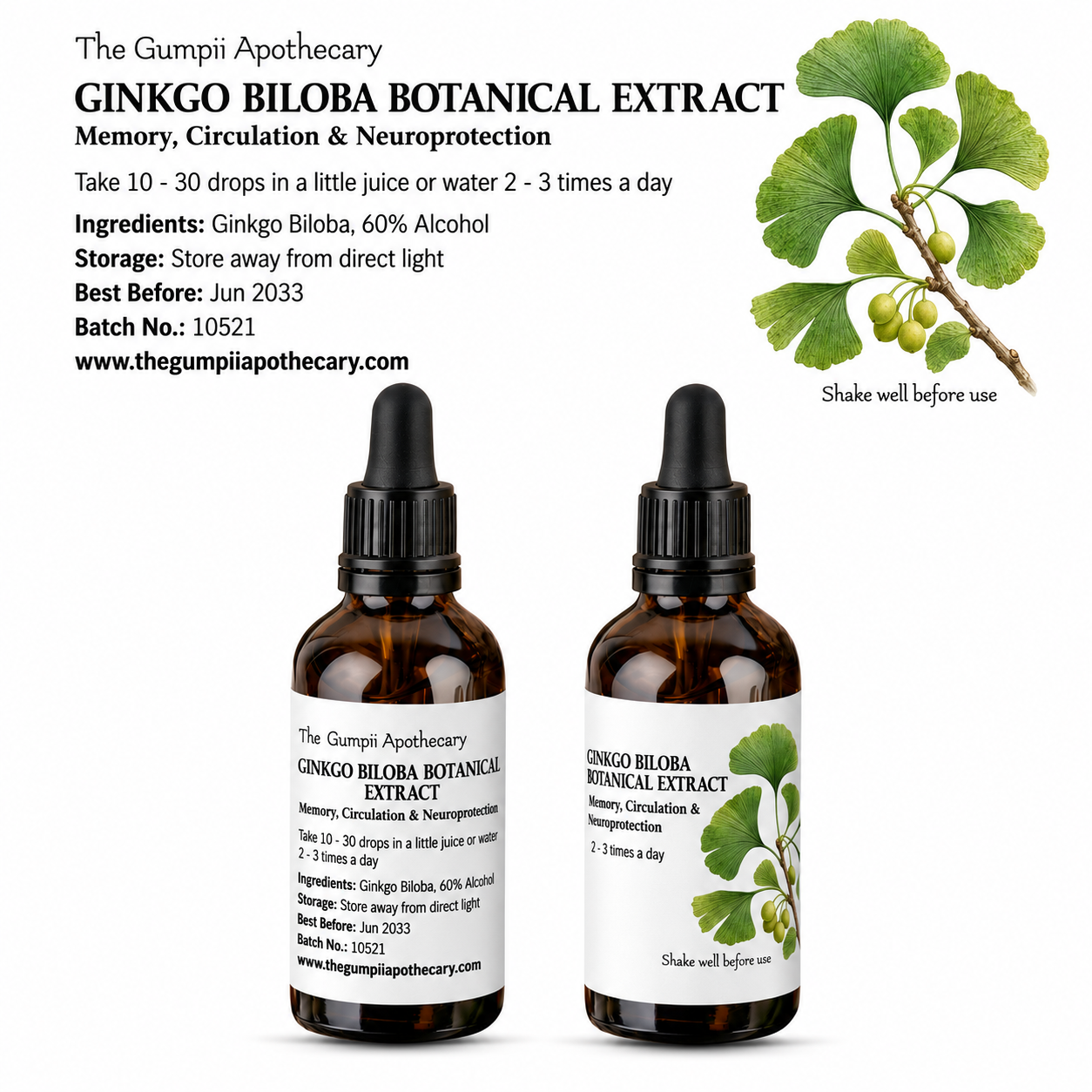
Ginkgo Biloba Extract (Ginkgo biloba) Memory, Circulation & Neuroprotection
Ginkgo Biloba Extract (Ginkgo biloba) Memory, Circulation & Neuroprotection
Couldn't load pickup availability
Ginkgo Biloba Extract (Ginkgo biloba) Memory, Circulation & Neuroprotection
One of the world's oldest and most studied medicinal trees, Ginkgo biloba has been used in Traditional Chinese Medicine for over 3,000 years. Its unique combination of ginkgolides, bilobalide, and flavonoids makes it a powerhouse for cerebral circulation, neuroprotection, and cognitive enhancement — particularly in older adults.
Traditional Use
Ginkgo biloba has been used in Chinese medicine since approximately 1350 AD, traditionally prescribed for fever, cough, overactive bladder, skin disorders, and neurodegenerative disease prevention. It is listed in the Chinese traditional medical reference Compendium of Materia Medica and remains one of the most widely sold medicinal botanicals globally.
How It Works
Ginkgo biloba works through multiple synergistic mechanisms:
- Cerebral blood flow — ginkgolides promote vasodilation and increase oxygenation to the brain, enhancing delivery of acetylcholine precursors and nutrients to memory and decision-making regions
- Acetylcholinesterase (AChE) support — supports cholinergic signalling, complementing AChE-inhibiting herbs like Sage, Rosemary, and Bacopa
- Neuroprotection — ginkgolides and bilobalide protect neurons from oxidative stress, inflammation, and neurotoxic substances; studied for Alzheimer's and Parkinson's management
- Antiplatelet activity — ginkgolides A, B, C, J, and M are potent PAF (platelet-activating factor) antagonists, reducing platelet aggregation and supporting cardiovascular health
- Antioxidant — flavonoids (quercetin, kaempferol, isorhamnetin) scavenge free radicals and reduce oxidative cellular damage
Naturally Occurring Compounds
| Compound Class | Key Constituents | Primary Actions |
|---|---|---|
| Flavonoids | Quercetin, kaempferol, isorhamnetin, rutin, luteolin | Antioxidant, anticancer, anti-inflammatory, neuroprotective |
| Ginkgolides (Diterpenes) | Ginkgolides A, B, C, J, M | PAF antagonism, antiplatelet, anti-inflammatory, neuroprotective |
| Bilobalide (Sesquiterpene) | Bilobalide | Neuroprotective, cognitive support, neuronal survival |
| Biflavonoids | Ginkgetin, amentoflavone, sciadopitysin | Antithrombotic, anti-obesity |
| Proanthocyanidins | Catechins, proanthocyanidins | Antioxidant, anti-inflammatory, hepatoprotective |
How to Use
1–2ml, 1–2x daily in water or juice. Best taken consistently over 4–8 weeks for cumulative cognitive and circulatory benefit. Can be combined with the Memory Trio for a comprehensive acetylcholine support stack.
Precautions
- Increased bleeding risk — avoid combining with aspirin, warfarin, NSAIDs, or other anticoagulant medications without medical supervision
- Avoid with seizure medications and certain antidepressants — consult your healthcare provider
- Not recommended during pregnancy or breastfeeding due to limited safety data
- May cause gastrointestinal disturbances, headaches, or dizziness at higher doses
- Individuals with epilepsy or seizure susceptibility should avoid use
- Always consult a healthcare professional before use if you are on prescription medication
Stack This With
- Memory Trio — Sage, Rosemary & Bacopa — triple-action AChE inhibition; Ginkgo adds cerebral circulation to complete the ultimate cognitive stack
- Lion's Mane — NGF stimulation and neuroplasticity
- Magnesium Glycinate — nervous system calm, sleep quality, synaptic plasticity
Related Wellness Guides
Research & References
- Ginkgo biloba: Phytochemical Profile & Pharmacological Activities — MDPI Molecules, 2023
- Ginkgo biloba: Evidence-Based Review — PMC NIH
- Talreja S. Ginkgo biloba: Therapeutic and Pharmacological Review. Int. J. in Pharm. Sci., 2023, Vol 1, Issue 7, 326–334