In stock
The Gumpii Apothecary
Gumpii Apothecary Wildcrafted Australian Mistletoe Capsules Loranthaceae 450mg 100 Capsules
Gumpii Apothecary Wildcrafted Australian Mistletoe Capsules Loranthaceae 450mg 100 Capsules
Couldn't load pickup availability
Wildcrafted Australian Mistletoe Capsules (Loranthaceae)
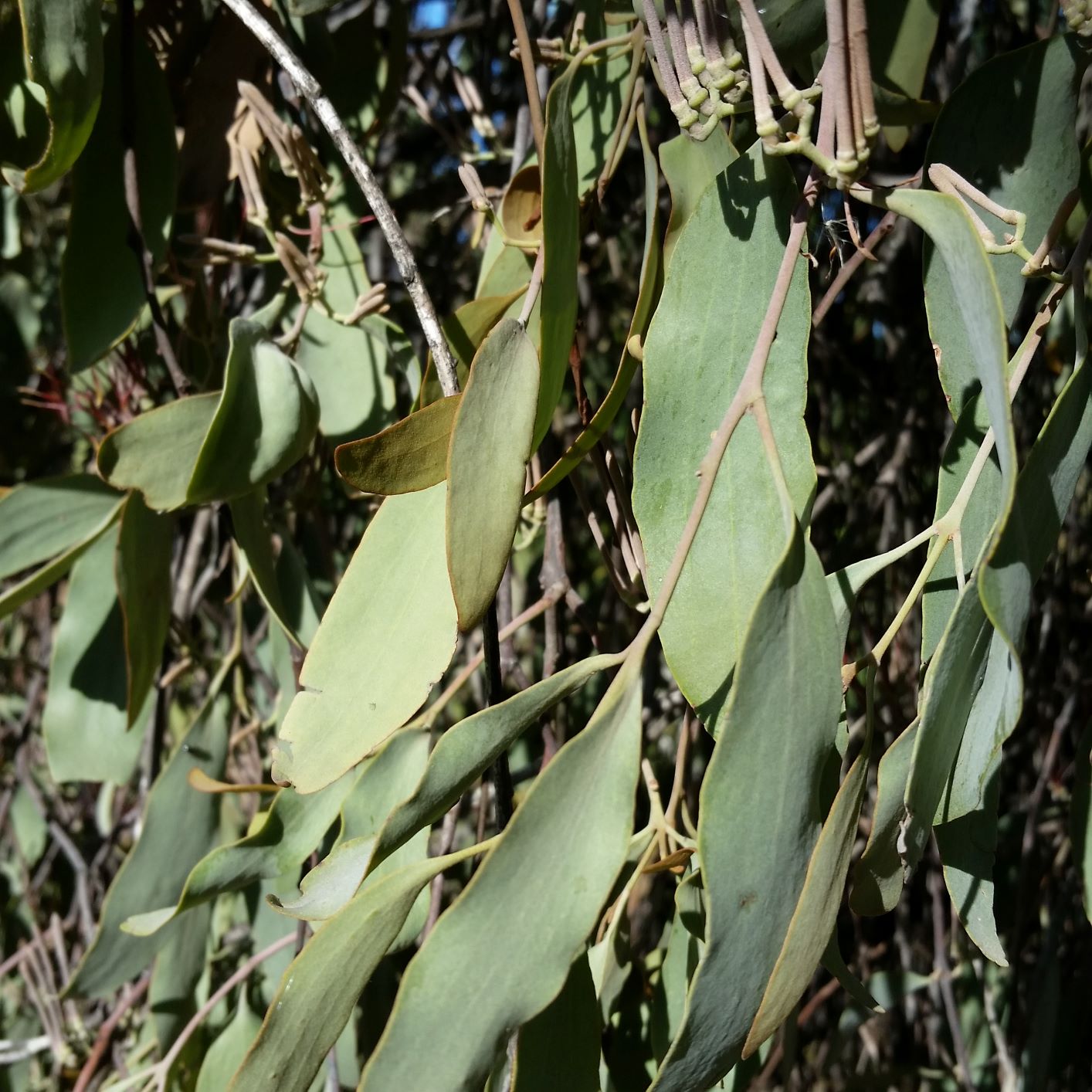
Australia is home to approximately 90 native species of mistletoe from the Loranthaceae family — a botanically extraordinary group of hemiparasitic plants that attach to host trees via specialised haustoria, drawing water and minerals from their hosts while continuing to photosynthesise independently. These plants are not mere parasites; they are phytochemically complex botanicals with a rich history of traditional use and a growing body of scientific research behind them.
Common Australian species include Amyema miquelii (Box Mistletoe), Amyema quandang (Grey-leaf Mistletoe), Dendrophthoe vitellina (Long-flowered Mistletoe), and Muellerina eucalyptoides (Creeping Mistletoe). Uniquely, the medicinal properties of mistletoe may vary depending on the host tree it inhabits — a fascinating dimension of this plant's therapeutic character that has been observed across Loranthaceae species globally.
These capsules are prepared from wildcrafted Australian Loranthaceae mistletoe aerial parts, carefully harvested and encapsulated to deliver the full spectrum of bioactive constituents in a convenient daily format.
Phytochemical Profile
Australian Loranthaceae mistletoes contain a rich and complex array of bioactive constituents, including:
- Lectins & Viscotoxins — glycoproteins and polypeptides with immunomodulatory, cytotoxic, and apoptosis-inducing properties; the primary focus of modern mistletoe cancer research
- Flavonoids — including quercetin, quercitrin, and the unusual glycoside 4"-O-acetylquercitrin; anticancer, anti-inflammatory, antioxidant, and antiproliferative activity
- Tannins & Loranthin — hydrolysable tannins with antiviral, antibacterial, and anticancer properties; loranthin is a newly identified flavanocoumarin with free radical scavenging activity
- Alkaloids — antibacterial, vasodilatory, anti-asthmatic, and antimicrobial activity
- Terpenoids — antibacterial, antimicrobial, anti-inflammatory, analgesic, antioxidant, and potential anticancer activity; essential oil of Amyema miquelii is rich in terpenes regardless of host species
- Gallic Acid — neuroprotective activity
- Phenolics & Polysaccharides — immune system modulation, antioxidant, antiviral, and proapoptotic effects
- Quercitrin, Kaempferol, Rutin, Ellagic Acid, β-sitosterol & Oleanolic Acid — anti-inflammatory, antioxidant, hepatoprotective, and anticancer activity
Traditional & Ethnobotanical Use
Mistletoe — whose name is believed to derive from the Celtic word for "all-heal" — has one of the longest recorded histories of any medicinal plant. Across cultures and continents, Loranthaceae mistletoes have been used for cardiovascular support, respiratory ailments, headache, uterine toning following childbirth, menstrual disorders, wound healing, epilepsy, and as a general tonic for vitality and longevity.
In Ayurvedic tradition, Dendrophthoe falcata (Banda/Bandaka) — a Loranthaceae species native to Australia, India, and South-East Asia — is used as a nervine tonic for epilepsy, hysteria, and convulsions; for digestive and gastrointestinal wellness; respiratory support including asthma and bronchitis; urinary conditions including kidney stones; and as a garbhasthapaka — a herb that supports fetal retention and pregnancy. The whole plant is used in indigenous systems of medicine as cooling, bitter, astringent, and diuretic.
Key Areas of Nutritional & Traditional Wellness Support
Cardiovascular & Blood Pressure Wellness
Mistletoe is one of the most well-documented herbal hypotensives in traditional and contemporary practice. Research on Loranthus ferrugineus has demonstrated significant vasorelaxant and blood pressure lowering activity in animal models, operating via a non-adrenergic mechanism. Matthew Wood describes mistletoe as opening circulation to areas cut off by tension, reducing cardiovascular tension while bringing new blood and healing to weakened tissues. It has also been used traditionally to prevent arterial shrinkage and support healthy cardiac function.
Immune System & Oncology Support
Mistletoe is one of the most extensively researched complementary herbs in oncology. Lectins (ML-I, ML-II, ML-III) are the primary immunomodulatory and cytotoxic constituents, functioning as ribosome-inactivating proteins that inhibit protein biosynthesis in cancer cells, inducing apoptosis and necrosis. Viscotoxins further contribute cytotoxic and immunogenic effects. Preclinical studies across multiple mistletoe species have demonstrated cytotoxic activity against breast cancer (MCF-7), Ehrlich ascitic carcinoma, skin cancer, chronic myeloid leukaemia, and myeloma cell lines. Rudolf Steiner first introduced mistletoe into oncology in 1920; it remains one of the most widely used complementary cancer therapies in Europe today, with preparations including Iscador, Helixor, and Eurixor.
Nervous System & Neurological Wellness
Mistletoe is a traditional nervine — used historically for stress, anxiety, insomnia, epilepsy, hysteria, and convulsions. Gallic acid, present in Loranthaceae species, has demonstrated neuroprotective effects against oxidative stress in animal models. Terpenes present in Australian mistletoe species (including pinene and linalool) have shown neuroprotective, sedative, and cognition-supporting properties in research. Matthew Wood notes mistletoe promotes contemplation, reflection, and recovery.
Antioxidant & Anti-inflammatory Wellness
The flavonoid and phenolic content of Australian Loranthaceae mistletoes confers significant antioxidant activity. Quercetin and quercitrin have demonstrated anti-inflammatory, antiproliferative, and endothelial protective effects in research. Terpenes including myrcene, alpha-pinene, and beta-caryophyllene block key inflammatory signalling pathways and have demonstrated analgesic activity in preclinical studies — with some terpenes shown to be as effective as morphine for neuropathic pain in animal models.
Antimicrobial & Antiviral Wellness
Loranthaceae mistletoes contain multiple constituents with antimicrobial and antiviral activity — including tannins, loranthin, alkaloids, terpenoids, and phenolics. Terpenes such as limonene, carvacrol, and thymol disrupt bacterial and fungal cell membranes and may enhance the effectiveness of existing antimicrobials.
Respiratory Wellness
Mistletoe has a traditional history of use for respiratory ailments including chronic cough, bronchitis, and asthma. Its alkaloid content contributes vasodilatory and anti-asthmatic activity, while its anti-inflammatory properties support soothing of irritated airways and bronchioles. In Ayurvedic practice, Dendrophthoe falcata is specifically indicated for Kapha-related respiratory conditions.
Metabolic & Blood Sugar Wellness
Traditional use of mistletoe for blood sugar regulation is supported by emerging laboratory evidence suggesting potential to stimulate insulin synthesis and improve insulin sensitivity. African mistletoe species have demonstrated antidiabetic properties in research, with activity influenced by host species.
Digestive & Gastrointestinal Wellness
Mistletoe has been used traditionally for gastrointestinal wellness including dyspepsia, indigestion, diarrhoea, and gut inflammation. Its antispasmodic properties support smooth muscle relaxation in the intestines. In Ayurvedic practice, Dendrophthoe falcata leaf juice is used for diarrhoea and dysentery.
Women’s Wellness
Folk medicine traditions across Europe and Asia have used mistletoe for menstrual disorders including cramps and heavy flow, uterine toning following childbirth, and fertility support. In Ayurvedic practice, Dendrophthoe falcata is used as a garbhasthapaka — supporting fetal retention in cases of threatened miscarriage.
How to Use
Take 2–4 capsules daily as a dietary supplement, or as directed by your healthcare practitioner. Best taken with food and water.
Precautions
Not recommended during pregnancy or breastfeeding. Do not consume mistletoe berries. Consult your healthcare practitioner before use if you are taking cardiovascular, blood pressure, or immunosuppressant medications. If you are on antihypertensive drugs, use with caution as mistletoe may potentiate blood pressure lowering effects. Discontinue use at least 2 weeks prior to surgery. Consult your healthcare practitioner before use if you have a history of liver conditions. Not recommended for use alongside asthma medications without practitioner guidance. Keep out of reach of children. Store in a cool, dry place away from direct sunlight.
Ingredients
Wildcrafted Australian Mistletoe (Loranthaceae spp.) aerial parts. Vegetable capsule shell. No fillers, binders, or flow agents.
Stack This With
- Australian Mistletoe Extract — liquid extract for faster absorption and flexible dosing alongside the capsules
- Gumpii Extract — foundational Australian botanical base for cardiovascular and systemic wellness
- Wilga Extract — complementary Australian native for immune and anti-inflammatory support
- Turmeric Extract — complementary anti-inflammatory and antioxidant support
- Magnesium Glycinate — complementary cardiovascular and nervous system support
Related Wellness Guides
- Wellness Hub — explore all herbal guides
Content provided for informational purposes only. Not medical advice. Not intended to diagnose, treat, or cure any condition. Consult your healthcare practitioner.