In stock
The Gumpii Apothecary
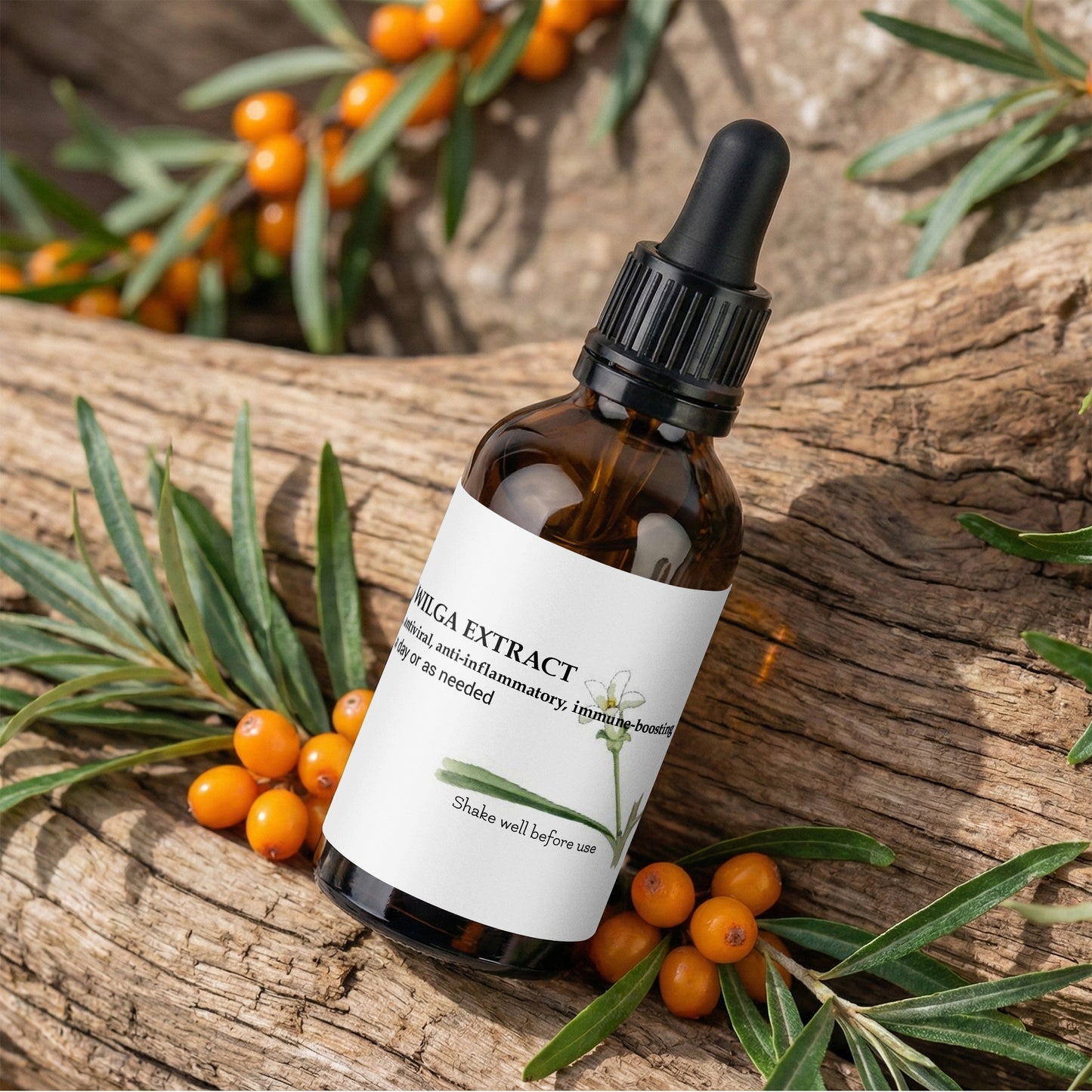
Gumpii Apothecary Wildcrafted Australian Wilga Extract Geijera parviflora 30ml 50ml 100ml
Gumpii Apothecary Wildcrafted Australian Wilga Extract Geijera parviflora 30ml 50ml 100ml
Couldn't load pickup availability
Australian Wilga Extract (Geijera parviflora)
Wilga is one of Australia's most potent native botanicals — wildcrafted from carefully selected female trees and extracted in 60% alcohol to capture the full spectrum of naturally occurring plant compounds.
About Geijera parviflora
The leaves of Geijera parviflora contain a complex and well-researched profile of coumarins, flavonoids, and alkaloids — compounds that contribute to its broad botanical activity and distinctive aromatic character. Wilga is a cornerstone of The Gumpii Apothecary range and a key ingredient in our Firewater formulations.
Traditional Use
Wilga has been used for generations in traditional Aboriginal bush medicine across multiple applications. Medicinally, leaves were used to numb pain — particularly toothache — and applied both internally and externally. The plant is regarded as one of Australia's most versatile native botanicals, and this extract honours that tradition in a modern, easy-to-use liquid format.
How to Use
Take 20–30 drops under the tongue or in a little juice or water, up to 2–3 times daily, or as directed by your healthcare practitioner.
Stack This With
- Gumpii Extract — foundational botanical base
- X-CV Firewater — daily tonic (contains Wilga)
- Firewater Alcohol Extract — concentrated broad-spectrum support
- Magnesium Glycinate — recovery and nervous system support
Want to Combine Several Tinctures?
We'll blend them into one bottle for you — saving you money and simplifying your routine. Find out more →
Related Collections
- Immune, Respiratory & Infection Support
- Pain, Inflammation & Joint Health
- Wellness Hub — explore all herbal guides
Areas of Traditional Use & Scientific Research Interest
Wilga has a broad range of traditional and research-supported applications. It is used both internally and topically.
Internal — areas of traditional use and active research exploration:
- Immune system support
- Anti-inflammatory activity
- Antimicrobial, antiviral, antifungal, and antiparasitic properties
- Pain relief and analgesic effects
- Antioxidant and free radical scavenging activity
- Circulatory and cardiovascular support
- Digestive support
- Neurological wellness — an area of emerging research interest in botanical science
- Antidiabetic properties — an area of growing research interest
- Muscle relaxant effects
- Mood and stress support — an area of research interest
- Cellular wellness — coumarin compounds are subjects of ongoing scientific investigation in laboratory settings
- Ocular wellness — an area of emerging research interest
- Hormonal activity — research is exploring steroidal compound associations
Topical — traditionally and in research contexts associated with:
- Skin and topical wellness applications
- Natural insect repellent
- Local anaesthetic effects — consistent with traditional Aboriginal use for pain and toothache
- Antifungal activity on skin
- Antimicrobial and antibacterial activity against Gram-positive strains
All properties listed reflect traditional applications and/or areas of active scientific research into Geijera parviflora and its constituent compounds. This information is provided for educational purposes only and does not constitute medical advice.
What the Research Shows
Essential oils from Geijera parviflora have been extracted, characterised, and studied across multiple chemotypes. Research — including GC/MS analysis and TLC bioautography — has identified four main chemotypes and investigated a range of bioactivities. One chemotype containing linalool, geijerene/pregeijerene, 1,8-cineole and bicyclogermacrene demonstrated promising antimicrobial and free radical scavenging activity (Sadgrove et al., 2014). Very high antifungal activity against dermatophyte species has also been noted (Sadgrove et al., 2011). Antibacterial anthranilic acid derivatives from Geijera parviflora have shown good antibacterial activity against several Gram-positive strains.
Wilga is notably high in coumarin compounds. Coumarins are a well-studied class of naturally occurring plant chemicals occupying an important place in medicinal chemistry due to their unique oxygen-containing heterocyclic structure, high bioavailability, broad spectrum activity, low toxicity, and fewer drug resistance issues. The Rutaceae family is known for its high coumarin content, and coumarin compounds are being actively studied as medicinal candidates across a wide range of applications.
Peer-reviewed research has confirmed that alcohol (solvent) extraction of Geijera parviflora captures three distinct compound classes — monoterpenoids, sesquiterpenoids, and diterpenes (predominantly coumarins) — with coumarins being the highest abundance volatile components in the solvent extract. Critically, these coumarins are completely absent from essential oils produced by steam distillation, demonstrating that alcohol extraction delivers a significantly broader and more therapeutically relevant compound profile (Sadgrove et al., 2016). Learn more about why we use alcohol extraction →
Australian native botanicals in the same botanical family as Wilga have been the subject of in vitro (laboratory) phytochemical research. This research is at an early, exploratory stage and does not constitute clinical evidence of efficacy in humans. Results are presented for informational and educational purposes only.
Geijera parviflora is well tolerated and no known adverse reactions have been reported.
Selected Research References
- Geijera parviflora — Research Overview (Typeset.io)
- PubMed — Geijera parviflora bioactivity study
- UQ eSpace — Antibacterial anthranilic acid derivatives from Geijera parviflora
- ScienceDirect — Phytochemistry & bioactivity
- ScienceDirect — Essential oil characterisation
- ScienceDirect — Coumarin compounds & medicinal chemistry
- Sadgrove, N.J., Lyddiard, D., & Jones, G.L. (2016). Bioactive volatiles from Geijera parviflora Lindl. (Rutaceae): evidence for coumarin chemotypes. Acta Horticulturae, 1125.
- He, X., Fan, R., Liu, M., Wang, H., Zhang, Y., & Xie, T. (2025). Recent advances of potential antitumor agents from natural sesquiterpenoids. Phytomedicine.
Key Features
- Wildcrafted from carefully selected female Wilga trees
- Extracted in 60% alcohol for broad-spectrum compound capture
- Small batch, Australian made
- Rich in naturally occurring coumarins, flavonoids, and alkaloids
- A foundational native botanical for everyday wellness routines
- Well tolerated — no known adverse reactions
Why Choose a Liquid Extract
- Efficient extraction of a broad range of plant compounds
- Faster absorption compared to dried or encapsulated herbs
- Flexible dosing — easy to adjust and combine with other extracts
- Convenient daily use
Real Experiences
Personal Account — Jen Beatty
"I was bitten by a spider and noticed significant swelling in my leg. I applied Wilga tincture topically and used the Wilga & Gumpii Cream over the following days. My recovery progressed well and the local health shop owner was impressed with how it had resolved."
This is a personal account only. Always seek medical attention for suspected venomous bites or any significant skin reaction.
Content provided for informational purposes only. Not medical advice. Not intended to diagnose, treat, or cure any condition. Consult your healthcare practitioner.