The Gumpii Apothecary
Lobelia Extract (Lobelia inflata)
Lobelia Extract (Lobelia inflata)
Couldn't load pickup availability
Lobelia Extract (Lobelia inflata)
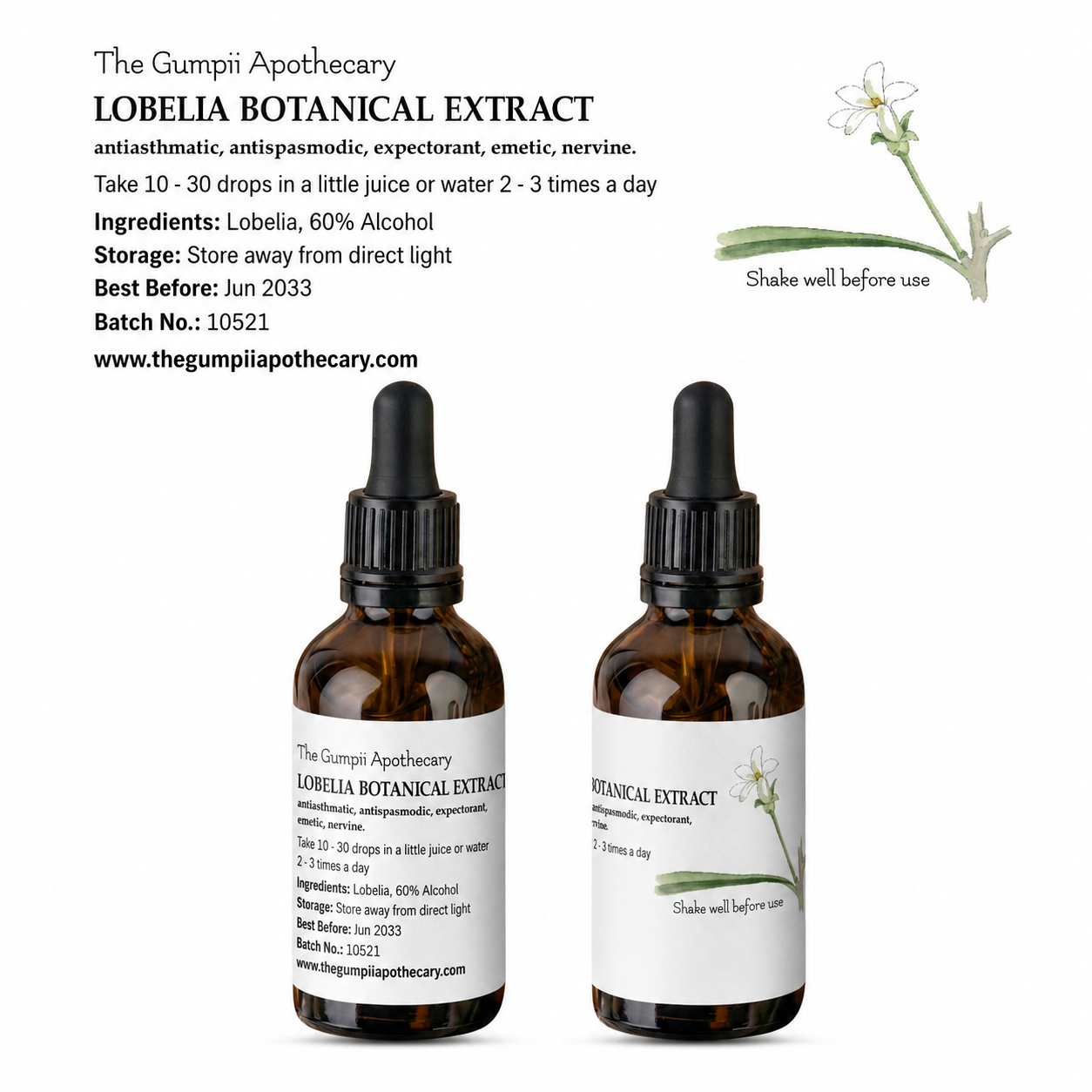
Lobelia inflata is one of the most distinctive and historically significant herbs in Western herbal medicine. Known for its remarkable affinity for the respiratory and nervous systems, Lobelia has a long traditional history of use as an expectorant, antispasmodic, and nervine herb. It is classified in Western herbal medicine as a relaxant expectorant — a category of herbs traditionally used to ease respiratory tension, support the airways, and calm the nervous system simultaneously. This extract is prepared in 60% alcohol from Lobelia inflata aerial parts.
Traditional Herbal Use
Respiratory & Airway Wellness
As a relaxant expectorant and antispasmodic herb — it's traditionally used to support respiratory comfort and airway wellness, mucous membrane wellness, and respiratory comfort. Used for upper and lower respiratory wellness it remains a classic inclusion in traditional respiratory herbal formulas.
Muscle & Antispasmodic Wellness
Lobelia's antispasmodic properties have made it a traditional inclusion in Western herbal formulas for muscle and antispasmodic wellness. Its relaxing properties have been applied traditionally to support muscular comfort and relaxation.
Nervous System & Relaxation Wellness
Lobelia has a traditional history of use in Western herbal medicine as a nervine and relaxant herb. Its calming properties are included in herbal formulas for nervous system wellness, stress, and relaxation support.
Expectorant & Mucous Clearance Wellness
Lobelia acts as an expectorant for supporting the body's natural processes of mucous clearance. It has been used traditionally to support the body during seasonal respiratory wellness challenges.
Herbal Synergy — Herbs That Work Well With Lobelia
- Cayenne Pepper — a classic Thomsonian pairing; the warming, stimulating properties of cayenne are traditionally combined with Lobelia's relaxing properties to support respiratory wellness
- Mullein Leaf — complementary demulcent and expectorant herb; together a traditional powerhouse for respiratory mucous membrane wellness
- Valerian — complementary nervine and relaxant herb; traditionally combined with Lobelia for nervous system calming and sleep wellness
- Thyme — complementary antimicrobial and expectorant herb for bronchial wellness support
- Licorice Root — complementary anti-inflammatory and harmonising herb for respiratory formulas
How to Use
Take 10–20 drops under the tongue or in a little juice or water, as needed, or as directed by your healthcare practitioner. Start with the lower dose and adjust as required. Lobelia is traditionally used in small, frequent doses rather than large single doses.
Precautions
Not recommended during pregnancy or breastfeeding without practitioner guidance. Use at recommended doses only. Not recommended for unsupervised use in children. Consult your healthcare practitioner before use if you are taking medications or have an existing health condition. As with all herbal extracts, individual responses may vary — begin with the lower recommended dose.
A Note on Safety
Lobelia has historically been described as a toxic herb. However, herbalist Paul Bergner reviewed the published literature and found that each author who described Lobelia as toxic was quoting another, in a chain of hearsay dating back to the early 19th century. The original reference appears to trace to a note in the American New Dispensatory of 1810. There have been no reported cases of death caused by Lobelia inflata in animals or humans at therapeutic doses. Used responsibly at recommended doses, Lobelia has a long and well-established traditional safety record.
Ingredients
Lobelia (Lobelia inflata) aerial parts, 60% alcohol.
Stack This With
- Mullein Extract — complementary demulcent and expectorant respiratory herb
- Cayenne Pepper Extract — classic Thomsonian pairing for respiratory wellness
- Breathe Ezy Respiratory Extract — comprehensive multi-herb respiratory wellness formula
- Gumpii Extract — foundational botanical base
Want to Combine Several Tinctures?
We'll blend them into one bottle for you — saving you money and simplifying your routine. Find out more →
Research & References
- Butler, J. E., et al. "Changes in Respiratory Sensations Induced by Lobeline After Human Bilateral Lung Transplantation." Journal of Physiology, vol. 534, 2001, pp. 583–593.
- Miller, D. K., et al. "Lobeline Inhibits the Neurochemical and Behavioral Effects of Amphetamine." Journal of Pharmacology and Experimental Therapeutics, vol. 296, 2001, pp. 1023–1034.
- Raj, H., et al. "How Does Lobeline Injected Intravenously Produce a Cough?" Respiratory Physiology and Neurobiology, vol. 145, 2005, pp. 79–90.
- Streit, Lizzie and Megan Soliman. "What Is Lobelia, and How Is It Used?" Healthline, 26 Sept. 2024, www.healthline.com/nutrition/lobelia.
- Zheng, Qinfang, et al. "Beyond Alkaloids: Novel Bioactive Natural Products From Lobelia Species." Frontiers in Pharmacology, vol. 12, 2021, p. 638210, doi.org/10.3389/fphar.2021.638210.
Content provided for informational purposes only. Not medical advice. Not intended to diagnose, treat, or cure any condition. Consult your healthcare practitioner.