In stock
The Gumpii Apothecary
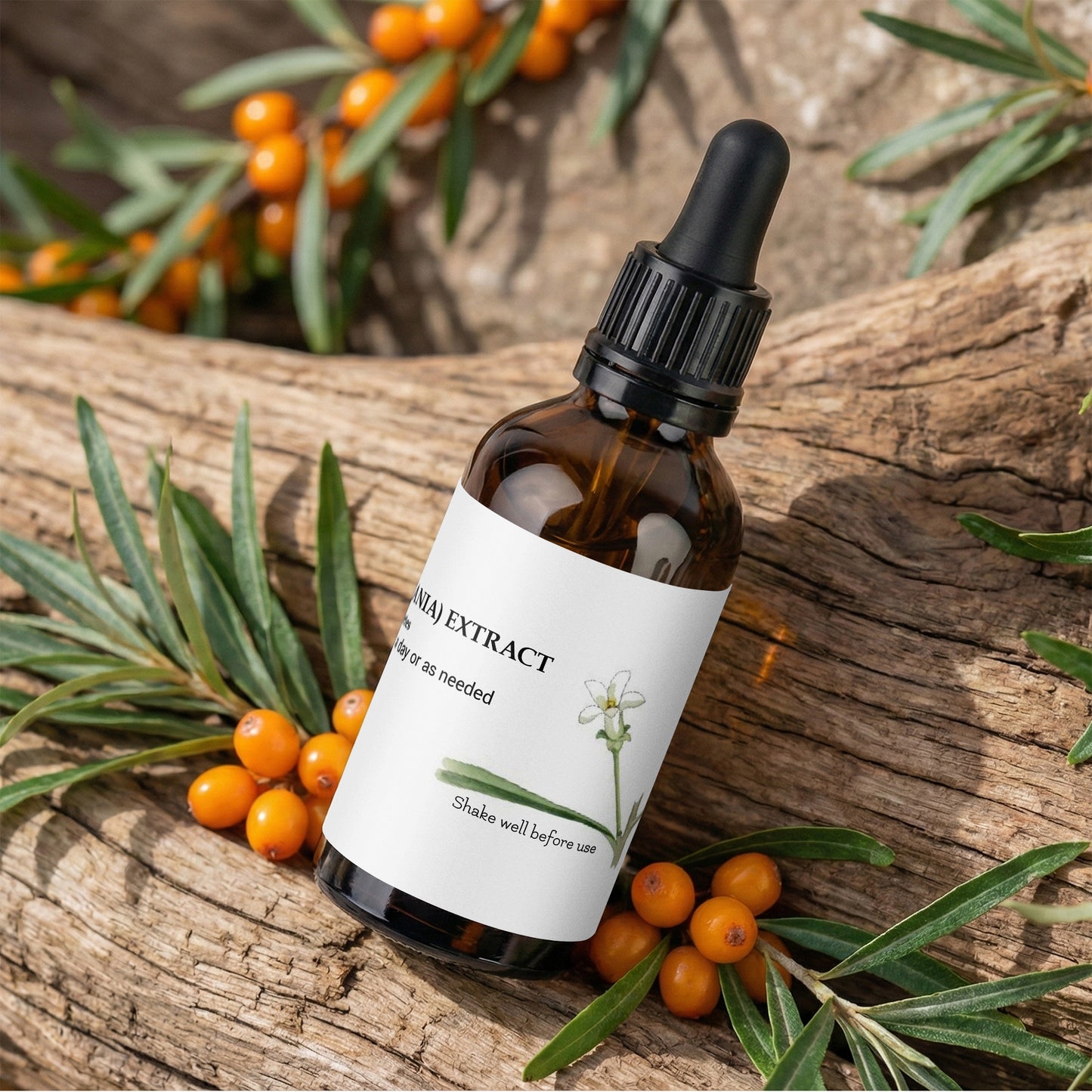
Organic Mediterranean Sage Extract
Organic Mediterranean Sage Extract
Couldn't load pickup availability
Organic Mediterranean Sage Extract (Salvia officinalis)
Sage (Salvia officinalis) is a perennial herb native to the Mediterranean basin. It was one of the most important medicinal herbs in ancient Greek, Roman, and medieval European herbal traditions, and remains one of the most widely used herbs in contemporary Western herbal practice.
Sage belongs to the Lamiaceae family alongside Rosemary, Thyme, and Oregano. It is classified as a carminative, astringent, and nervine herb in Western herbal medicine, with a particularly well-established traditional history of use for cognitive, digestive, and women's hormonal wellness. This extract is prepared in 60% alcohol from certified organic Mediterranean Sage leaf.
Traditional Herbal Use
Women's & Hormonal Wellness
Sage is one of the most important women's herbs in the Western herbal tradition, with a long history of use specifically for hot flushes, night sweats, and hormonal transitions including perimenopause and menopause. It is classified as a phytoestrogenic and thermoregulatory herb — meaning it supports the body's ability to regulate temperature and modulate oestrogen activity during hormonal fluctuation. Sage is one of the most widely used herbs in traditional formulas for menopausal symptoms, and contemporary research has generated significant interest in its role in reducing the frequency and intensity of vasomotor symptoms (hot flushes and night sweats).
Cognitive & Nervous System Wellness
Sage has one of the longest and most well-documented traditional histories of use for cognitive wellness of any herb in the Western herbal tradition. It is classified as a nervine and cognitive tonic herb in traditional herbal practice and has been used for memory and cognitive wellness since at least the ancient Greek period. Contemporary research into Sage and cognitive wellness has generated significant scientific interest, particularly in relation to its naturally occurring rosmarinic acid and volatile oil content.
Digestive & Gastrointestinal Wellness
Sage is classified as a carminative and digestive herb in Western herbal medicine, with a long traditional history of use for digestive and gastrointestinal wellness. Its aromatic and astringent properties have made it a classic inclusion in traditional herbal formulas for digestive support.
Oral & Throat Wellness
Sage has one of the longest traditional histories of use for oral and throat wellness of any herb in the Western herbal tradition. Its astringent and aromatic properties have made it a classic inclusion in traditional herbal formulas for oral and throat support, and it remains widely used in contemporary herbal practice for this purpose.
Immune Wellness
Sage has a traditional history of use in Western herbal medicine for immune wellness. Its naturally occurring volatile oil and phenolic content have made it a traditional inclusion in herbal formulas for immune support.
How to Use
Take 10–30 drops under the tongue or in a little juice or water, up to 2–3 times daily, or as directed by your healthcare practitioner.
Precautions
Not recommended during pregnancy or breastfeeding — Sage contains thujone, which is contraindicated in pregnancy, and has traditional use as a uterine stimulant and lactation suppressant. Not recommended for long-term continuous use at high doses without practitioner guidance due to thujone content. Consult your healthcare practitioner before use if you have epilepsy or a seizure disorder — high doses of thujone may lower seizure threshold. Consult your healthcare practitioner before use if you are taking diabetes medications or sedative medications.
Ingredients
Organic Mediterranean Sage (Salvia officinalis) leaf, 60% alcohol.
Stack This With
- Progest-E Replenishing Oil — bioidentical progesterone; addresses the hormonal root cause of hot flushes and night sweats
- Red Clover Extract — complementary phytoestrogenic herb for menopausal and hormonal wellness
- Passion Flower Extract — complementary nervine for sleep, anxiety, and hormonal wellness
- Rosemary Extract — complementary Lamiaceae cognitive and antioxidant herb
- Ashwagandha KSM-66 — complementary adaptogen for adrenal and hormonal support
- Gumpii Extract — foundational botanical base
Want to Combine Several Tinctures?
Our tinctures are designed to be combined. You can mix multiple extracts into a single dose — just add your chosen drops together into a small amount of water or juice. Start with one or two and build from there. If you'd like guidance on a personalised stack, contact us.
Related Wellness Guides
- Perimenopause Support Collection — symptom-led guide to hormonal transition
- Menopause Support Collection — targeted support for post-menopausal wellness
- Wellness Hub — explore all herbal guides
Naturally Occurring Compounds
- Rosmarinic acid — a naturally occurring caffeic acid ester; one of the primary antioxidant compounds in Sage and other Lamiaceae herbs; extensively researched in the context of cognitive and inflammatory wellness
- Carnosic acid and carnosol — naturally occurring diterpene phenols characteristic of Salvia and Rosmarinus species; among the most potent naturally occurring antioxidant compounds in the Lamiaceae family
- Ursolic acid and oleanolic acid — naturally occurring triterpenoids present in Sage leaf
- Flavonoids — including luteolin, apigenin, and hispidulin
- Volatile oils — including α-thujone, β-thujone, camphor, 1,8-cineole, and borneol; responsible for Sage's characteristic aroma and many of its traditional properties
- Salvianolic acids — naturally occurring polyphenolic compounds characteristic of Salvia species
- Phytosterols — naturally present in the leaf
Research & References
- Bommer S, et al. (2011). First time proof of sage's tolerability and efficacy in menopausal women with hot flushes. Advances in Therapy, 28(6), 490–500.
- Kianbakht S, et al. (2011). Improved glycemic control in patients with advanced type 2 diabetes treated with Salvia officinalis leaf extract. Journal of Medicinal Food, 14(4), 423–428.
- Scholey A, et al. (2008). An extract of Salvia (sage) with anticholinesterase properties improves memory and attention in healthy older volunteers. Psychopharmacology, 198(1), 127–139.
- Kennedy DO, et al. (2006). Effects of cholinesterase inhibiting sage (Salvia officinalis) on mood, anxiety and performance on a psychological stressor battery. Neuropsychopharmacology, 31(4), 845–852.
Content provided for informational purposes only. Not medical advice. Not intended to diagnose, treat, or cure any condition. Consult your healthcare practitioner.