In stock
The Gumpii Apothecary
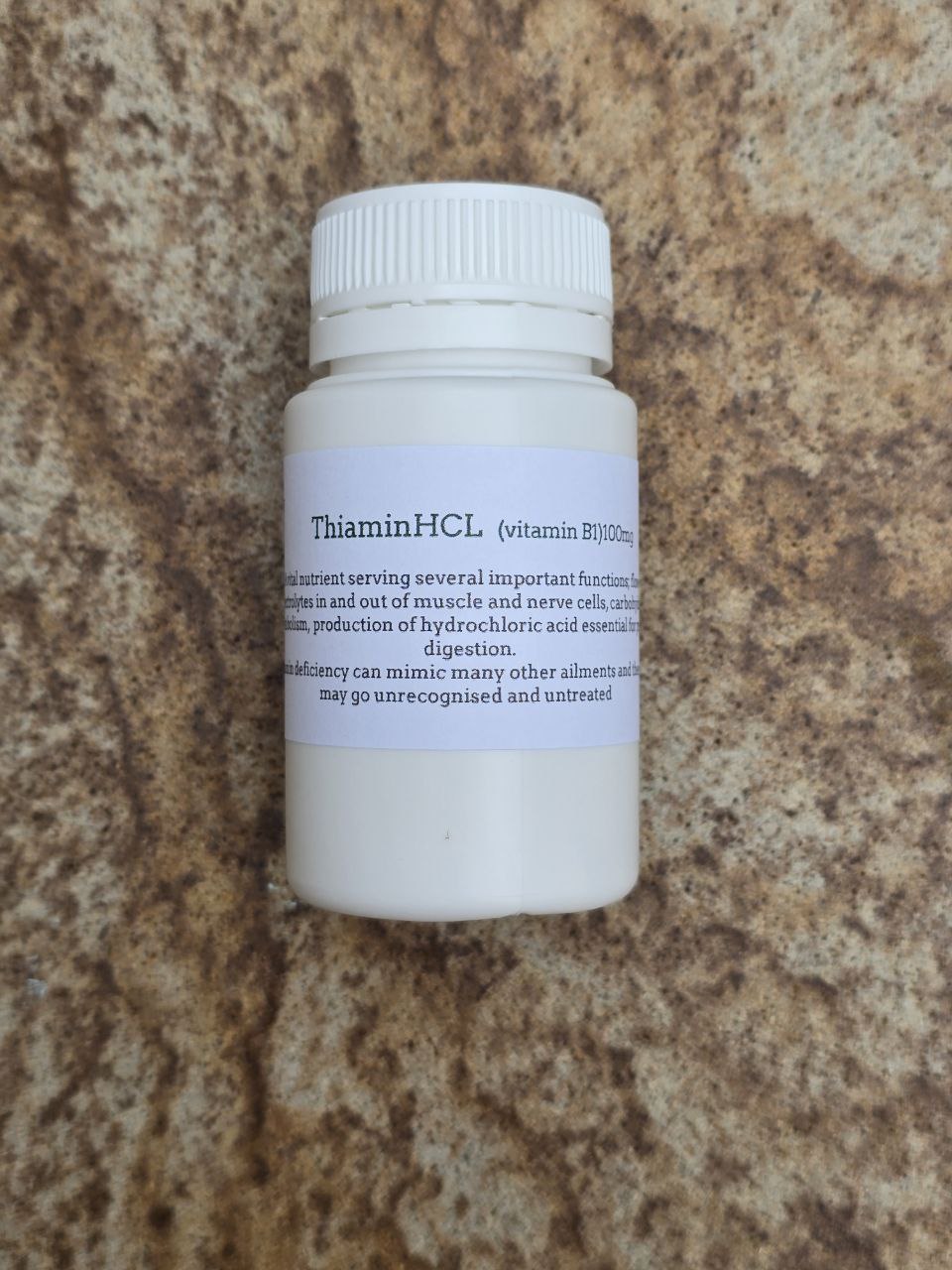
Gumpii Apothecary Vitamin B1 Thiamine HCL 100mg Energy & Nervous System Capsules
Gumpii Apothecary Vitamin B1 Thiamine HCL 100mg Energy & Nervous System Capsules
Couldn't load pickup availability
Vitamin B1 (Thiamine HCL) 100mg
Thiamine (Vitamin B1) is a water-soluble B vitamin and one of the most fundamentally important nutrients in human metabolism. It is the essential cofactor for several key enzymes in carbohydrate and energy metabolism — including pyruvate dehydrogenase and alpha-ketoglutarate dehydrogenase — making it the foundational “ignition key” of the body’s metabolic engine. Without adequate thiamine, the conversion of carbohydrates into usable cellular energy (ATP) cannot proceed normally.
Thiamine is found naturally in whole grains, legumes, nuts, and meat, but is readily depleted by modern dietary patterns, high refined carbohydrate and sugar intake, alcohol consumption, chronic stress, gut inflammation, and certain medications. Despite being an essential nutrient, thiamine insufficiency is more common than widely recognised — and is frequently underidentified in clinical practice. This product provides Thiamine HCL — the standard water-soluble form of Vitamin B1 — at 100mg per capsule. See also our Benfotiamine — the fat-soluble form of Vitamin B1 with enhanced tissue penetration.
Key Nutritional Roles of Thiamine
- Energy metabolism — thiamine is the essential cofactor for pyruvate dehydrogenase, the enzyme that converts pyruvate to acetyl-CoA — the critical gateway step between glycolysis and the Krebs cycle; without adequate thiamine, cellular energy production is impaired at a foundational level
- Nervous system function — thiamine is required for the synthesis of acetylcholine, a key neurotransmitter, and for the maintenance of myelin sheath integrity; it plays a central role in nerve conduction and nervous system wellness
- Cognitive function — thiamine is required for normal cognitive function and is found in high concentrations in the brain; it plays a key role in memory, concentration, and mental clarity
- Carbohydrate metabolism — thiamine is the essential cofactor for all three major carbohydrate-metabolising enzyme complexes; high carbohydrate and sugar intake significantly increases thiamine demand
- Cardiovascular function — thiamine is required for normal cardiac muscle function and plays a role in cardiovascular wellness; the heart is one of the most metabolically active organs and has high thiamine requirements
- Digestive wellness — thiamine supports the production of hydrochloric acid and plays a role in digestive function and gut motility
- Electrolyte balance — thiamine plays a role in the regulation of electrolyte flow across nerve and muscle cell membranes
- Immune function — thiamine plays a role in immune cell function and the body’s response to physiological stress
Thiamine Insufficiency — More Common Than You Think
Thiamine insufficiency is significantly underrecognised in contemporary clinical practice. Modern dietary patterns — particularly high refined carbohydrate and sugar intake — dramatically increase thiamine demand while simultaneously depleting dietary thiamine intake. Chronic stress, gut inflammation, alcohol consumption, and certain medications further increase thiamine requirements or impair absorption.
Common signs of suboptimal thiamine nutritional status may include persistent fatigue, brain fog, difficulty concentrating, nervous system discomfort, digestive irregularity, and cardiovascular irregularity. If you suspect your thiamine nutritional status may be suboptimal, testing is available through your healthcare practitioner. Thiamine is water-soluble and well tolerated — excess is excreted in urine.
Thiamine HCL vs Benfotiamine
Thiamine HCL is the standard water-soluble form of Vitamin B1. It is well absorbed and suitable for general thiamine nutritional support. It is the most widely used and researched form of Vitamin B1.
Benfotiamine is a fat-soluble thiamine derivative with significantly enhanced bioavailability and tissue penetration compared to Thiamine HCL — particularly in fat-soluble tissues including the nervous system. See our Benfotiamine for the fat-soluble option.
How to Use
Take 1 capsule daily as a dietary supplement, or as directed by your healthcare practitioner. Can be increased under practitioner guidance. Thiamine HCL is water-soluble and well tolerated — excess is excreted in urine. Best taken with food.
Precautions
Generally very well tolerated. Thiamine HCL is water-soluble and excess is excreted in urine, making toxicity extremely unlikely at supplemental doses. Consult your healthcare practitioner before use if you are pregnant or breastfeeding. Keep out of reach of children.
Ingredients
Thiamine HCL (Vitamin B1) 100mg per capsule. 90 capsules per bottle.
Stack This With
- Benfotiamine — fat-soluble Vitamin B1 for enhanced nervous system and tissue penetration
- Magnesium Glycinate — complementary essential mineral cofactor for energy and nervous system wellness
- Zinc Gluconate — complementary trace mineral for metabolic and immune wellness
- Gumpii Extract — foundational botanical base
Related Wellness Guides
- Wellness Hub — explore all herbal guides
Content provided for informational purposes only. Not medical advice. Not intended to diagnose, treat, or cure any condition. Consult your healthcare practitioner.