In stock
The Gumpii Apothecary
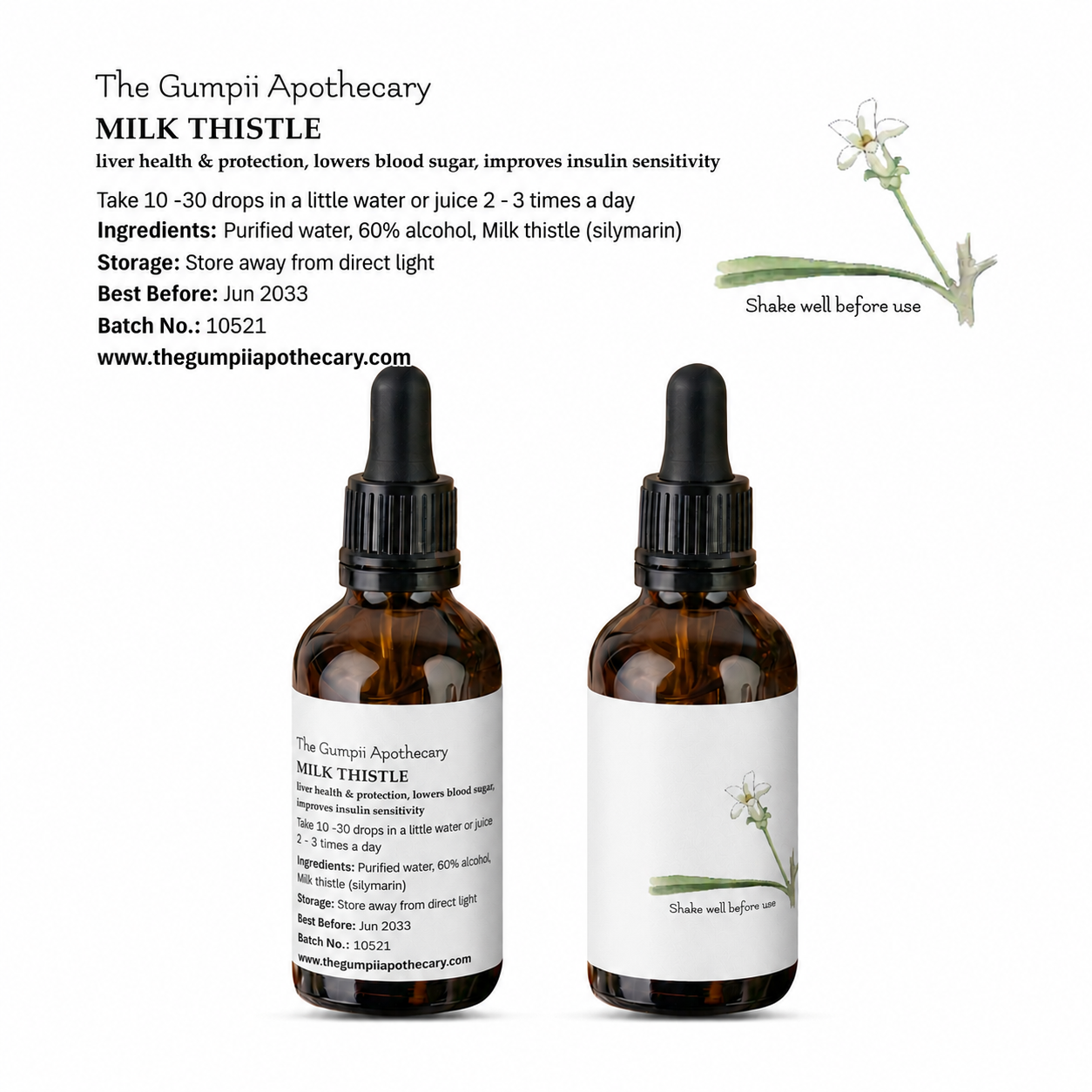
Milk Thistle - Silymarin Extract
Milk Thistle - Silymarin Extract
Couldn't load pickup availability
Milk Thistle Extract (Silybum marianum)
Milk Thistle (Silybum marianum) is a flowering herb native to the Mediterranean region with a documented history of use in Western herbal medicine spanning over 2,000 years. Revered in traditional European herbalism as a primary herb for liver and gallbladder wellness, Milk Thistle has been used by herbalists and physicians since antiquity for digestive and hepatic support. Silymarin — the naturally occurring flavonolignan complex extracted from the seeds — is the primary marker of Milk Thistle quality and potency, and one of the most extensively researched naturally occurring compounds in the context of liver wellness in contemporary botanical science. This extract is prepared in 60% alcohol from wildcrafted Silybum marianum seeds.
Traditional Herbal Use
Liver & Hepatic Wellness
Milk Thistle is one of the most important liver herbs in the Western herbal tradition as a primary hepatic tonic. It is classified as a hepatoprotective and hepatic trophorestorative herb in Western herbal medicine and is used to support liver and gallbladder wellness.
Gallbladder & Biliary Wellness
Milk Thistle is used for gallbladder and biliary wellness. Its bitter and cholagogue properties have made it a classic inclusion in traditional herbal formulas for digestive and biliary support.
Digestive Wellness
Milk Thistle for digestive wellness and its bitter tonic properties are included in herbal formulas for digestive support, fat digestion and upper digestive function.
Antioxidant Wellness
Milk Thistles' naturally occurring silymarin and flavonoid content have generated significant research interest in the context of antioxidant wellness, particularly in relation to hepatic tissue.
How to Use
Take 20–30 drops under the tongue or in a little juice or water, up to 2–3 times daily, or as directed by your healthcare practitioner. Milk Thistle is traditionally used as a long-term tonic herb — consistent daily use is recommended for best results.
Precautions
Not recommended during pregnancy or breastfeeding without practitioner guidance. May cause mild laxative effects in some individuals at higher doses. Consult your healthcare practitioner before use if you are taking diabetes medications, blood-thinning medications, or medications metabolised by the liver. Not recommended for individuals with known allergy to plants in the Asteraceae/Compositae family.
Ingredients
Wildcrafted Milk Thistle (Silybum marianum) seed, 60% alcohol.
Stack This With
- Gumpii Extract — foundational botanical base
- Ashwagandha Extract — complementary adaptogen for stress and adrenal wellness
- Glycine — complementary support for rest and recovery
Want to Combine Several Tinctures?
We’ll blend them into one bottle for you — saving you money and simplifying your routine. Find out more →
Related Wellness Guides
- Wellness Hub — explore all herbal guides
Naturally Occurring Compounds
- Silymarin complex — the primary flavonolignan complex unique to Silybum marianum; the key marker of Milk Thistle quality and potency; among the most extensively researched naturally occurring compounds in the context of liver wellness
- Silybin (Silibinin) — the most biologically active component of the silymarin complex; the primary compound of research interest
- Silydianin & Silychristin — naturally occurring flavonolignans present alongside silybin in the silymarin complex
- Isosilybin A & B — naturally occurring diastereomers of silybin present in the seed extract
- Flavonoids — including taxifolin and quercetin
- Fatty acids — naturally occurring in the seed, including linoleic acid
- Betaine — naturally occurring in the aerial parts
Research & References
Saller R, Meier R, Brignoli R. The use of silymarin in the treatment of liver diseases. Drugs. 2001;61(14):2035–63. PubMed — 28125040
Content provided for informational purposes only. Not medical advice. Not intended to diagnose, treat, or cure any condition. Consult your healthcare practitioner.